
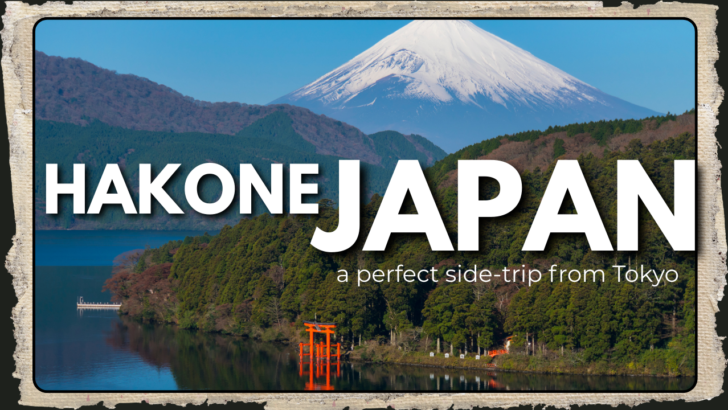
If Tokyo is all energy and motion, Hakone is where Japan exhales.
Just 90 minutes from Tokyo, Hakone feels like an entirely different world: quiet, green, and deeply rooted in tradition.
We spent two nights here during our Japan trip and stayed in a traditional ryokan, soaked in hot springs, hiked a centuries-old road, and experienced some of the most thoughtful hospitality we’ve ever encountered.
It ended up being one of the highlights of our entire trip.
If you’re planning a trip to Japan and have time for a stop between Tokyo and Kyoto, Hakone deserves a spot on your itinerary.
This post contains affiliate links, meaning if you click through and make a purchase I may make a small commission. I only share information about things I know, love and trust!
Why Hakone Is Worth Adding to Your Japan Itinerary
Hakone is often described as a “day trip from Tokyo,” but staying overnight completely changes the experience.
Instead of rushing through sightseeing loops, you have time to relax, unwind, and actually settle into the pace of the place.
Hakone is best known for:
- Natural hot springs (onsens)
- Traditional ryokan stays focused on hospitality and ritual
- Mountain scenery and Mount Fuji views on clear days
- Historic walking routes and cultural experiences
What It’s Like to Stay in a Traditional Ryokan
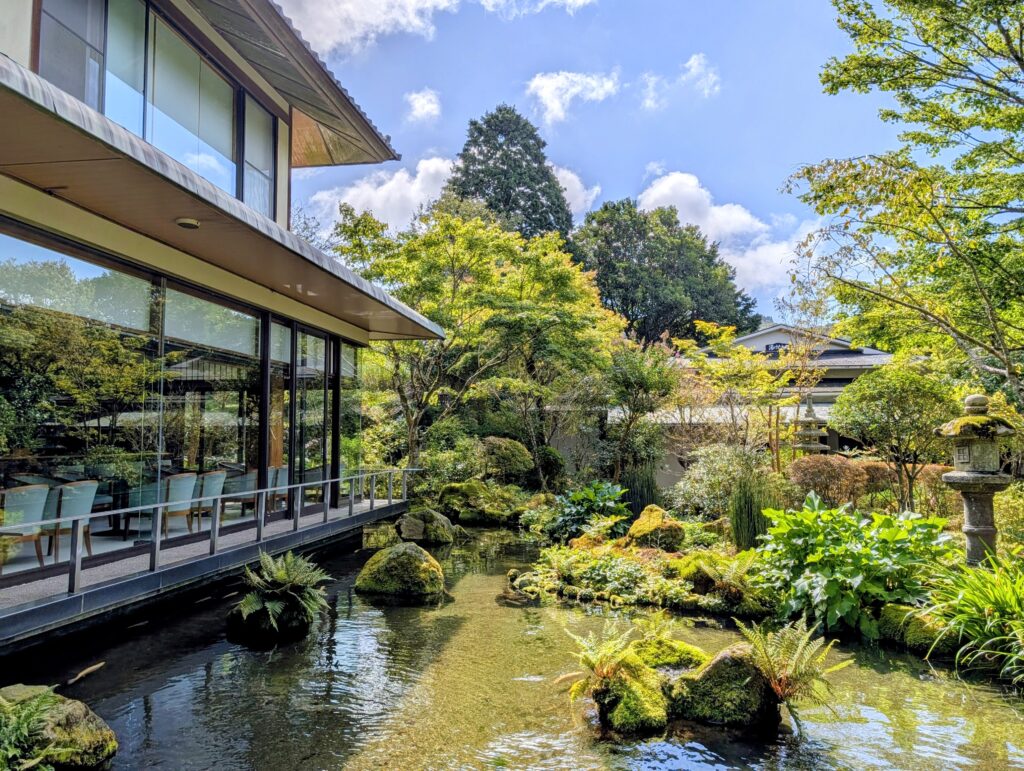
Our main reason for visiting Hakone was to experience our first ryokan stay, and it exceeded every expectation.
We stayed at: Takumino Yado Yoshimatsu (because it was rated 9.7 on Booking)
A ryokan is a traditional Japanese inn, but it’s far more than just a place to sleep.
Everything—from the architecture to the meals to the pace of the stay—is designed to help you slow down.
Typical ryokan features include:
- Tatami mat floors and sliding doors
- Futon bedding laid out each evening
- Multi-course dinners and breakfasts included
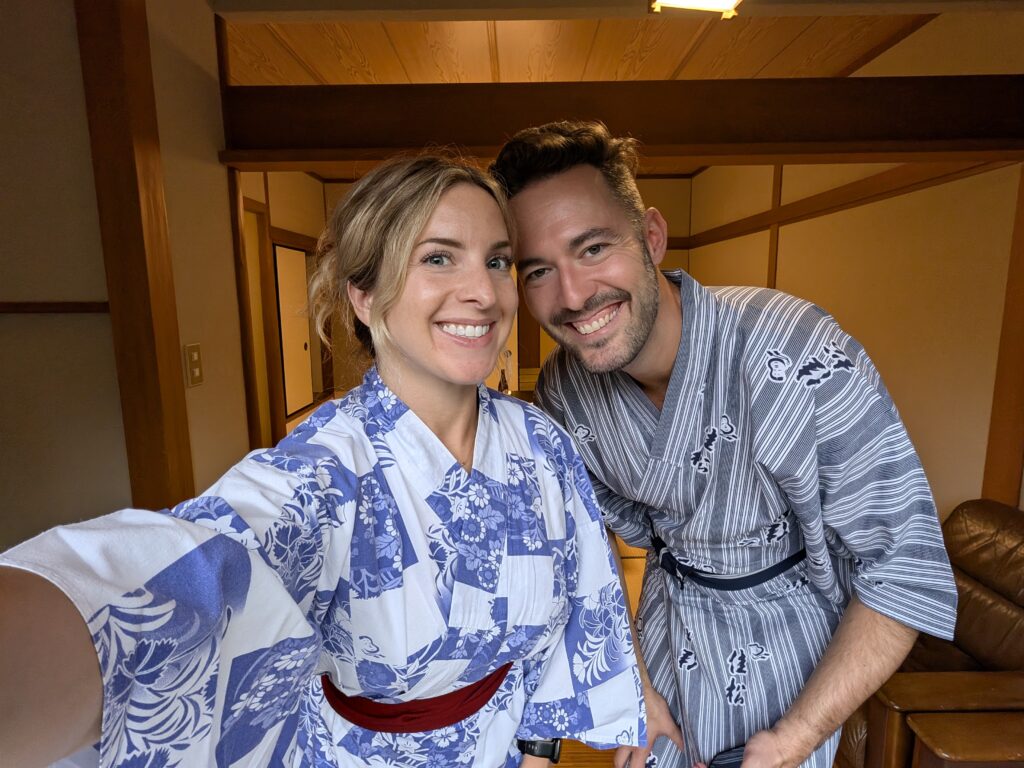
- Guests wearing yukata robes around the property
From the moment we arrived (welcomed with matcha and a view of Mount Fuji) we felt genuinely cared for in a way that’s hard to put into words.
Onsens: The Most Relaxing Part of the Stay

Onsens are natural hot springs heated by underground volcanic activity, and they play a central role in Japanese culture.
For centuries, people have practiced toji—using hot springs for rest, recovery, and healing—often by staying at a ryokan surrounded by nature.
At our ryokan, there were:
- Indoor and outdoor onsens
- Shared baths separated by gender
- Private onsen options for guests
Before entering an onsen, guests wash thoroughly, and bathing is done without clothing—a custom that may feel intimidating at first, but quickly becomes comfortable and natural.
Soaking outdoors, surrounded by nature and steam, was one of the most peaceful moments of our trip.
Tips for Enjoying the Onsens Here
Onsens are separated by gender, so there is a women’s and men’s onsen. The ‘communal’ ones are in a private outdoor setting and they switch each evening, so you can experience both sides.
No tattoos are allowed, but if you have small tattoo(s) that can be covered up, you may enter.
There are shower stations where you must wash yourself completely before entering the hot spring water.
Please no talking, it is a calm and peaceful experience.
There is one private onsen that you and your companion may use together.
Or, there are rooms you can book with their own private, open-air onsen. That would be my recommendation!
Kaiseki Dinner: Traditional Japanese Meal
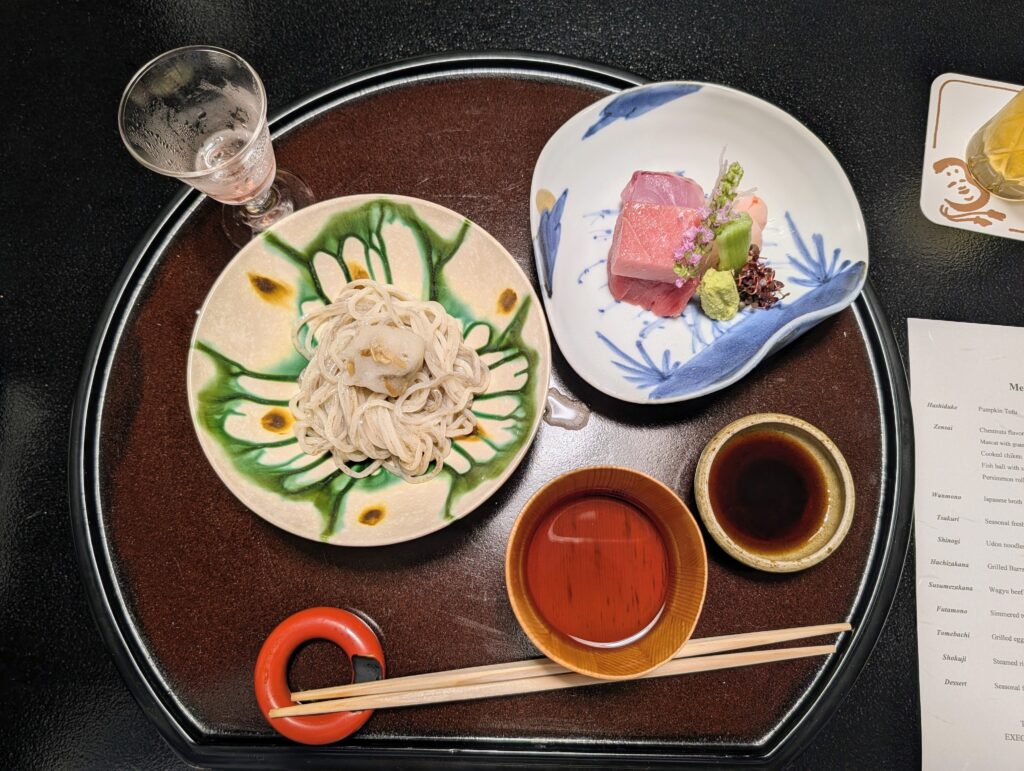
Dinner at a ryokan is a traditional kaiseki meal, and ours was served in our room over the course of the evening.
Kaiseki is a multi-course dinner guided entirely by the chef and the season. Each dish is small, beautifully presented, and focused on balance—of flavor, texture, and appearance.
Dinner unfolded slowly over about two hours and felt less like a meal and more like a quiet ceremony. There were flavors we’d never tasted before and ingredients we couldn’t always identify, but every course felt thoughtful and carefully composed.
Travel tip: if you’re not an adventurous eater or aren’t open to trying new foods, you might struggle with this meal. They do not offer substitutions.
If you’re open to trying new foods, this is one of the most rewarding ways to experience Japanese culture through cuisine.
Sleeping on Tatami
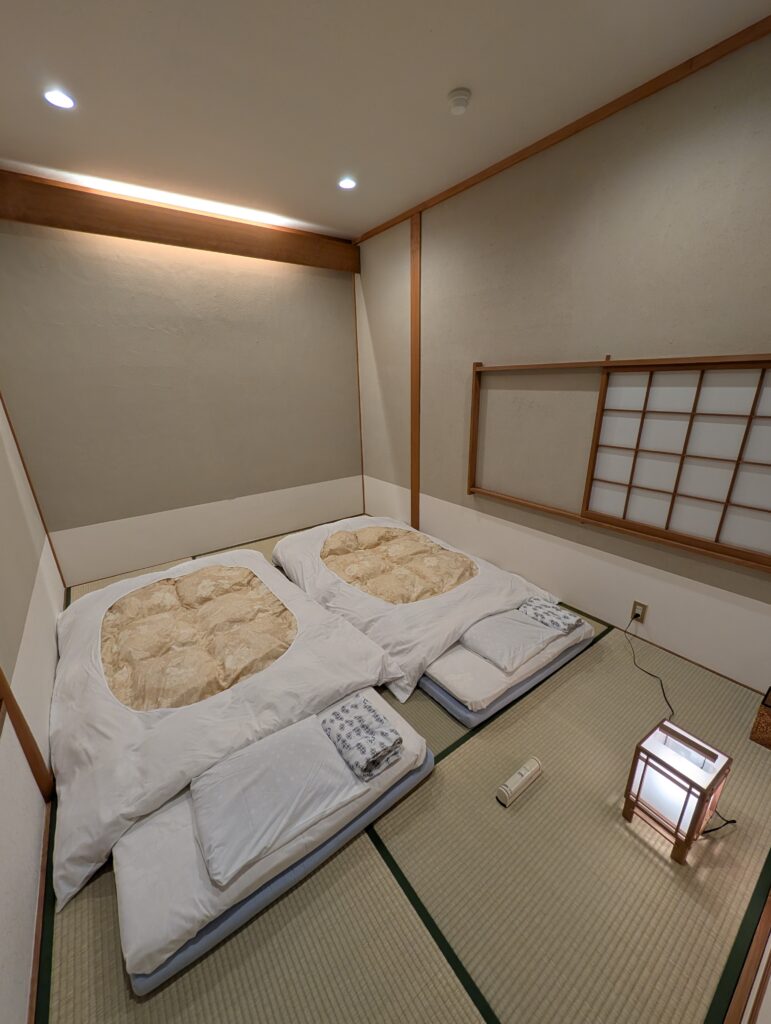
While we were enjoying an evening onsen soak, our room was transformed for sleep.
Futons were laid out on the tatami floor—another first for us—and surprisingly, one of the most comfortable nights we had in Japan.
The next morning, breakfast was served in our room once again, beautifully presented and completely different from a Western-style breakfast.
No bacon and eggs here—just traditional Japanese dishes that felt nourishing and unhurried.
Light Hiking on the Old Tokaido Road
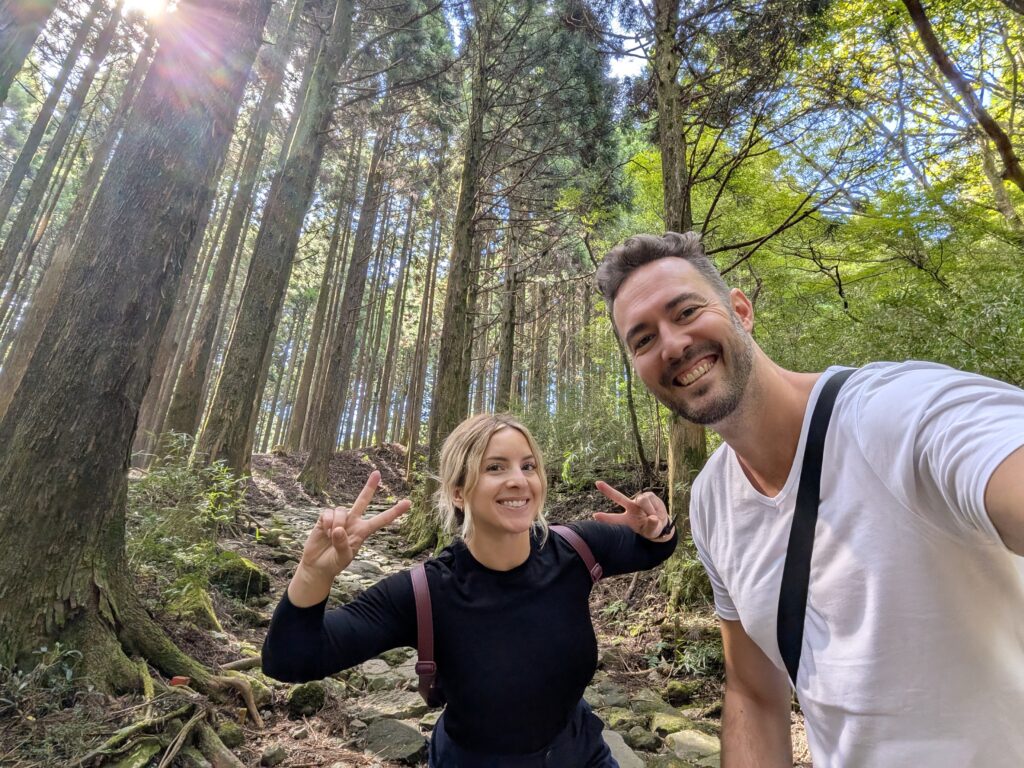
For our full day in Hakone, we skipped the usual sightseeing loop and hiked part of the Old Tokaido Road—a historic route that once connected Kyoto and Edo (modern-day Tokyo).
During the Edo period, this road was heavily traveled by samurai, merchants, pilgrims, and nobility. Towering cedar trees line the path, many planted in the early 1600s to provide shade for travelers.
Walking this road today feels like stepping into another time.
Our hike led us to Amazake Chaya, a historic tea house that has operated in the same location for centuries.
Here, we enjoyed warm amazake—a traditional sweet rice drink—and mochi made using recipes passed down through generations.
Lake Ashi, Mount Fuji & the Hakone Checkpoint
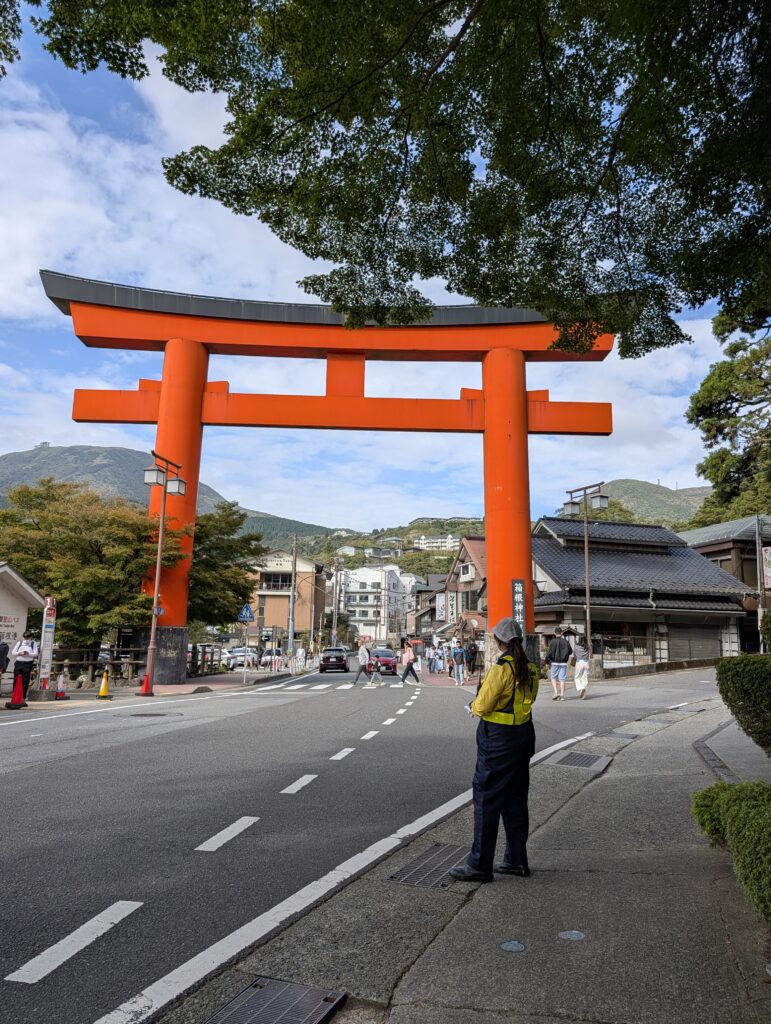
After the hike, we wandered along Lake Ashi and were lucky enough to catch views of Mount Fuji peeking out from behind the clouds.
This area is also home to the historic Hakone Checkpoint. During the Tokugawa era, travel along the Tokaido Road was strictly controlled, and this checkpoint played a major role in regulating movement.
Today, the reconstructed gates sit on their original site, offering a glimpse into Japan’s past.
This area is nice for a stroll and visiting some shops and cafes/restaurants.
Is Hakone Worth Visiting?
Absolutely.
It works especially well as a stop between the busier cities of Tokyo and Kyoto, giving you time to relax, unwind, and reset.
Our stay wasn’t inexpensive, but for a special occasion—and for a first ryokan experience—it was worth every yen.
If you’ve never stayed in a ryokan or experienced an onsen before, Hakone is an excellent place to start.
Where We Stayed in Hakone
Takumino Yado Yoshimatsu
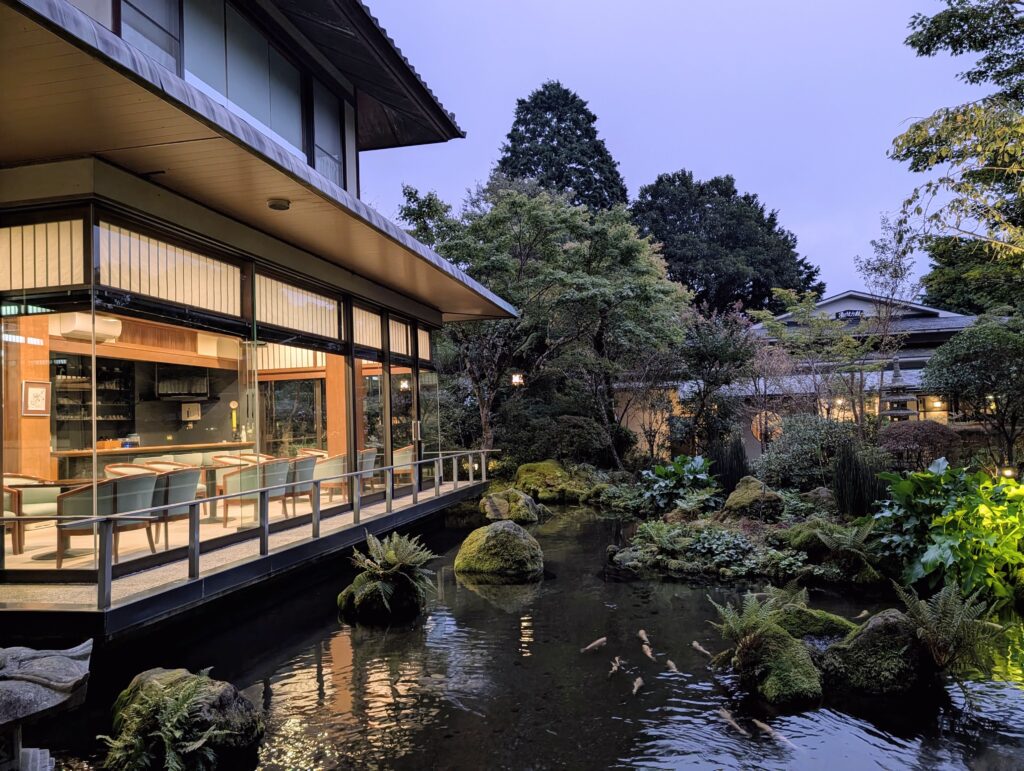
A traditional ryokan in Hakone surrounded by gardens, with views of Lake Ashi and Mount Fuji on clear days.
👉 Yoshimatsu Ryokan, book it here!
I also documented our entire Hakone stay on video if you’d like to experience it alongside this guide.